19 June 2025
Since the first lines of code were written in 2017, ADAMANT has sought to prove that everyday messaging, payments, and data exchange can be friction-free and sovereign. Eight years later, the project’s roadmap spans mature products, an expanding ecosystem, and a newly community-driven governance model. This is where ADAMANT stands today and where it is headed next.
See the updated Roadmap: https://adamant.im/roadmap
From Conception to Reliable Multiplatform Wallets (2017 – Q1 2024)
By Q1 2024, ADAMANT had evolved from a single-purpose blockchain messenger into a battle-tested, multi-asset communications stack with native wallets, exchange tools, and business-grade automation.
That’s how it started.
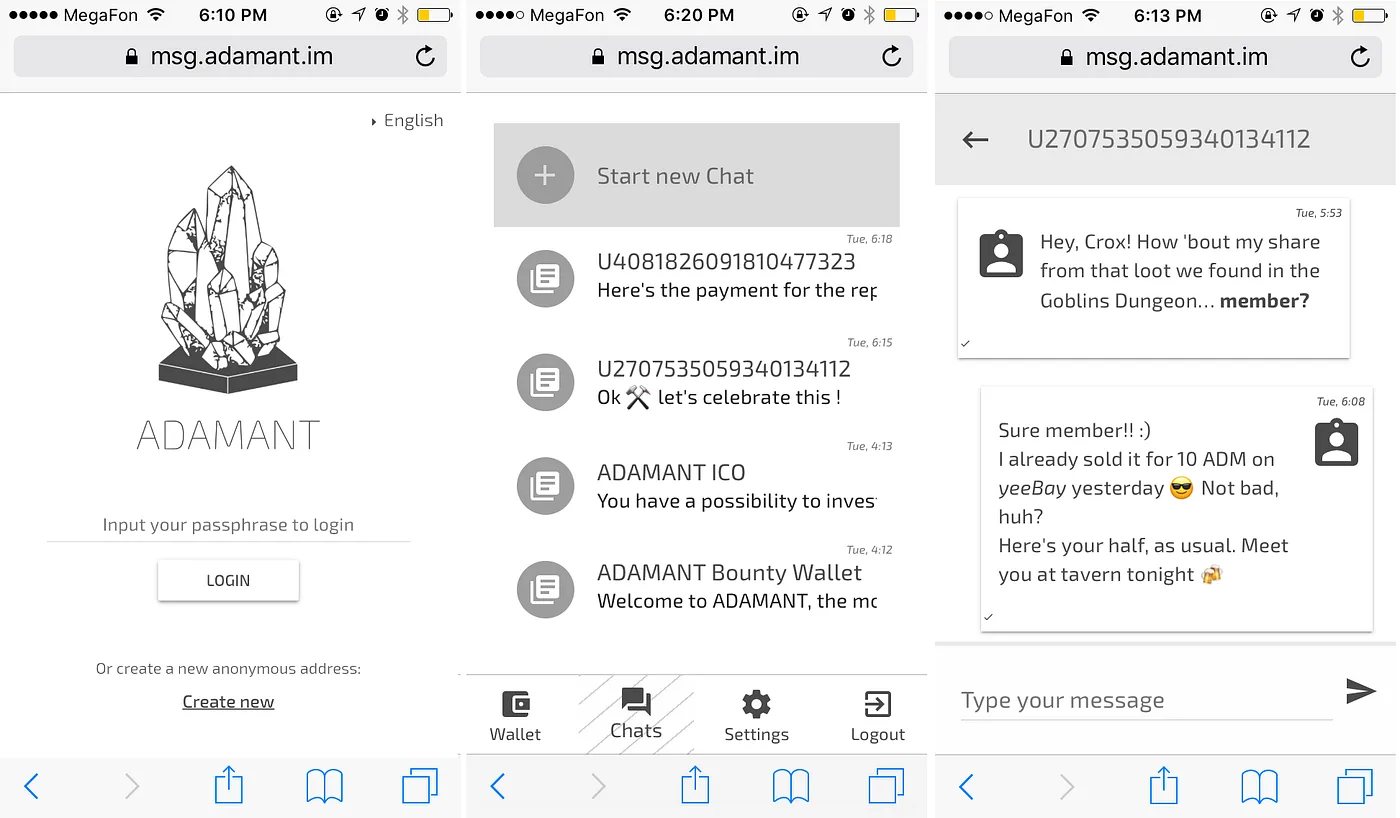
Early Interface of ADAMANT Messenger’s PWA
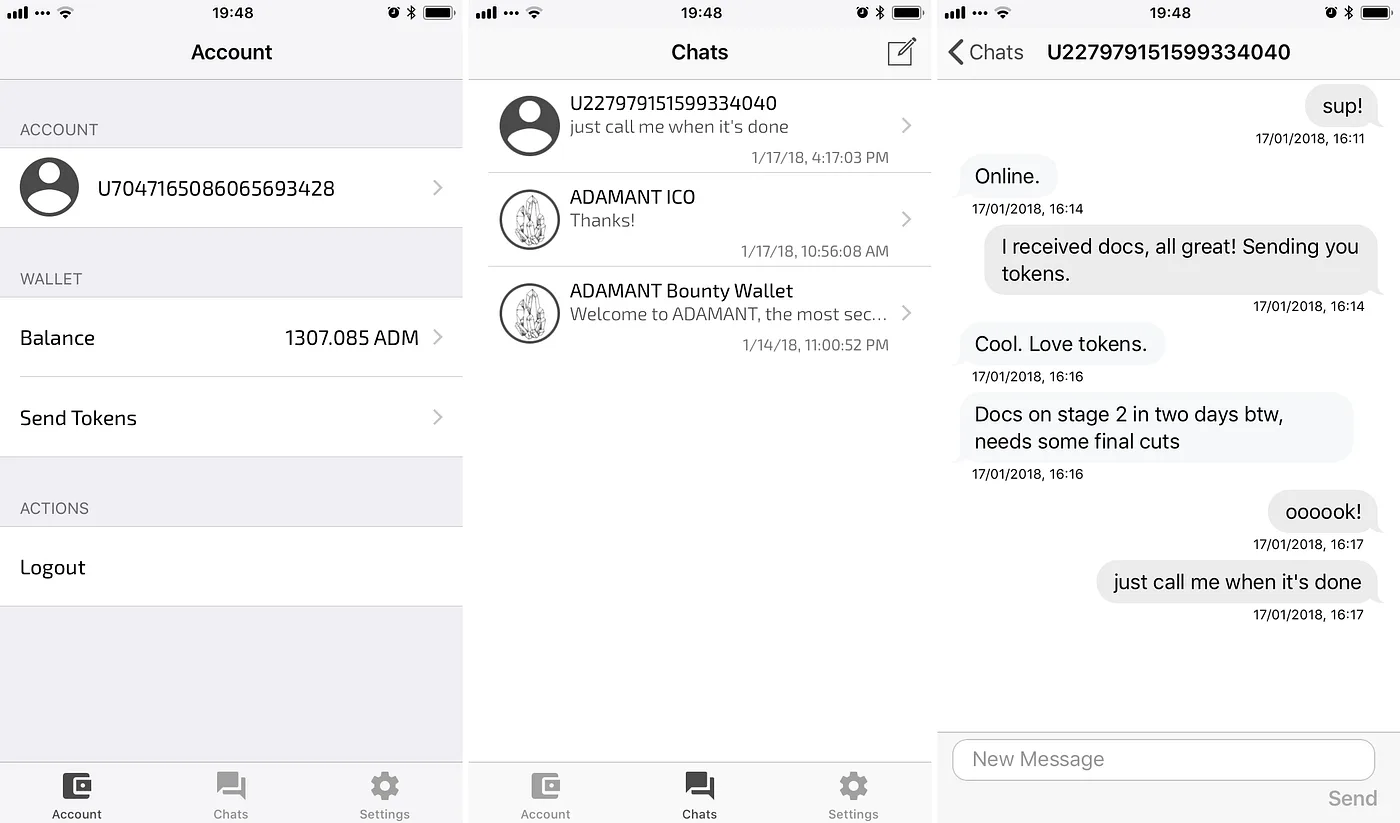
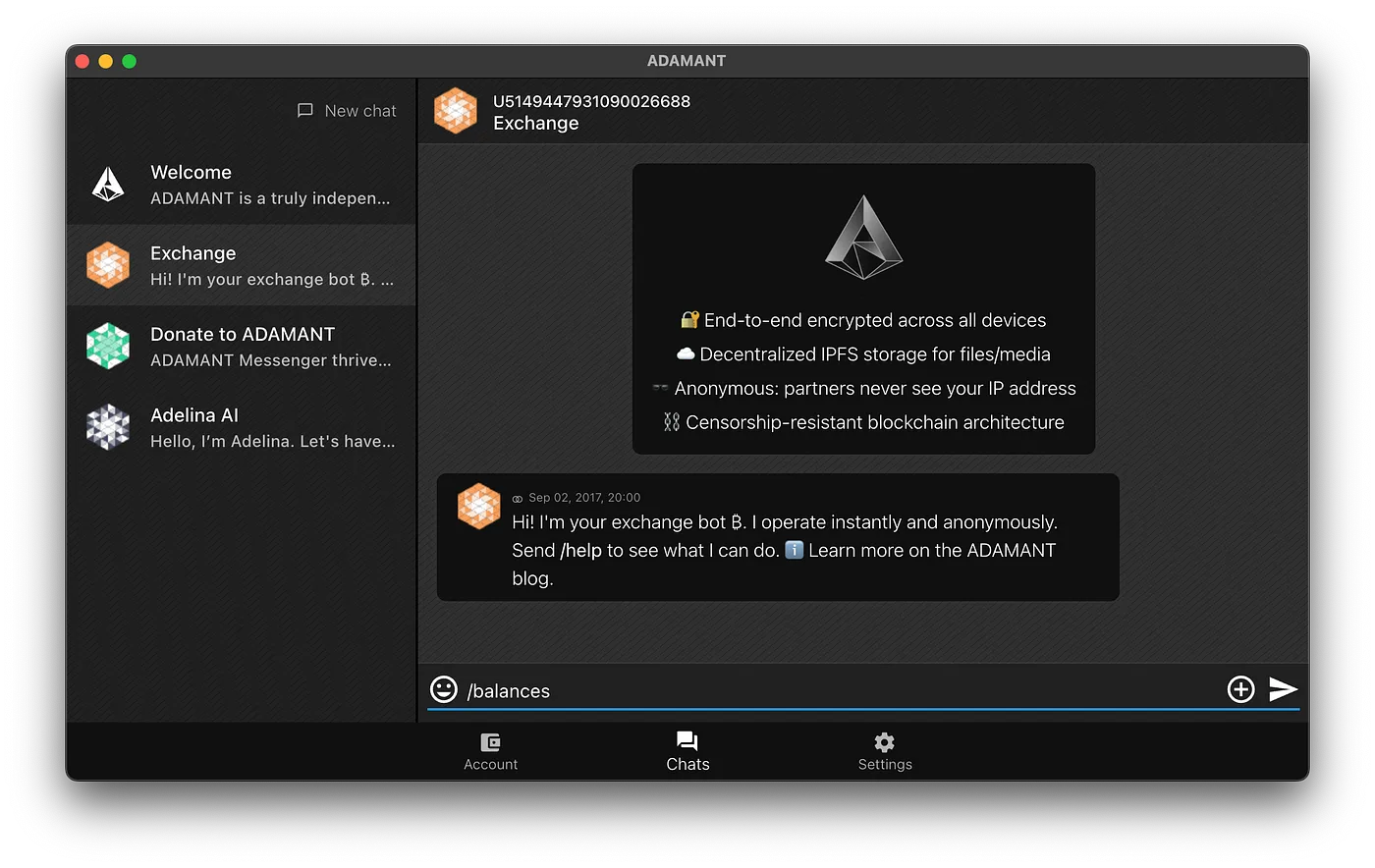
Prototype screens of ADAMANT Messenger’s iOS app
Since conception in 2017, the mission has been rooted in privacy, transparency, and technological independence. Mainnet launched in Q4 2017, and many groundbreaking features followed: in-chat crypto transactions for multiple currencies (BTC, ETH, DOGE, DASH, LSK, BNB, and more), messenger and wallet apps for iOS, Android, PWA, and desktop, blockchain 2FA, market-making bots, decentralized services, Tor and anonymous access support, plus console tools, API libraries, and full-node management.
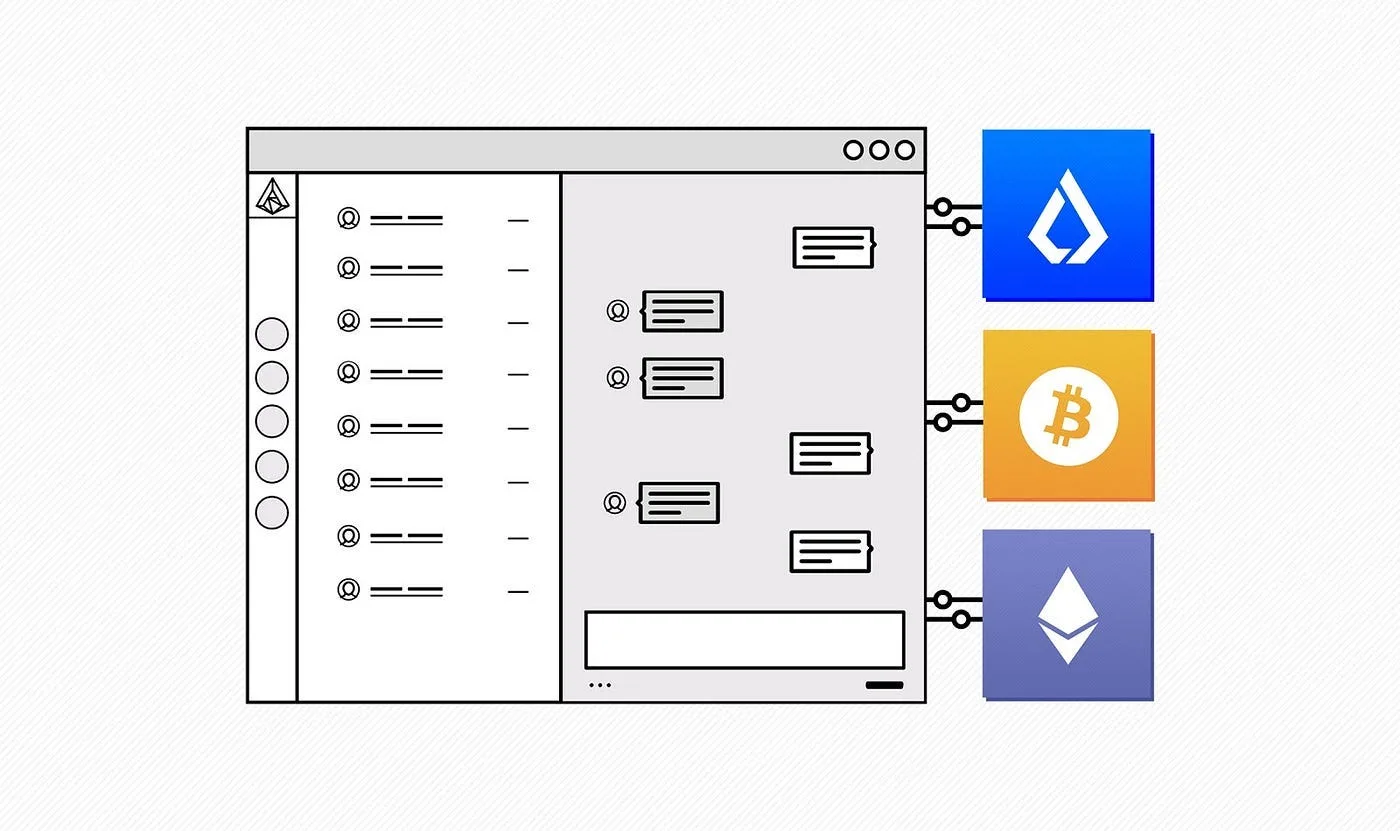
For the first time in blockchain history, ADAMANT introduced in-chat coin transfers.
By Q1 2024, the project had shipped a new website and media kit, major PWA and iOS releases with heightened reliability, airdrop tools, health checks, reactions, and ADM listings on exchanges such as Coinstore, DigiFinex, FameEX, and Tapbit.
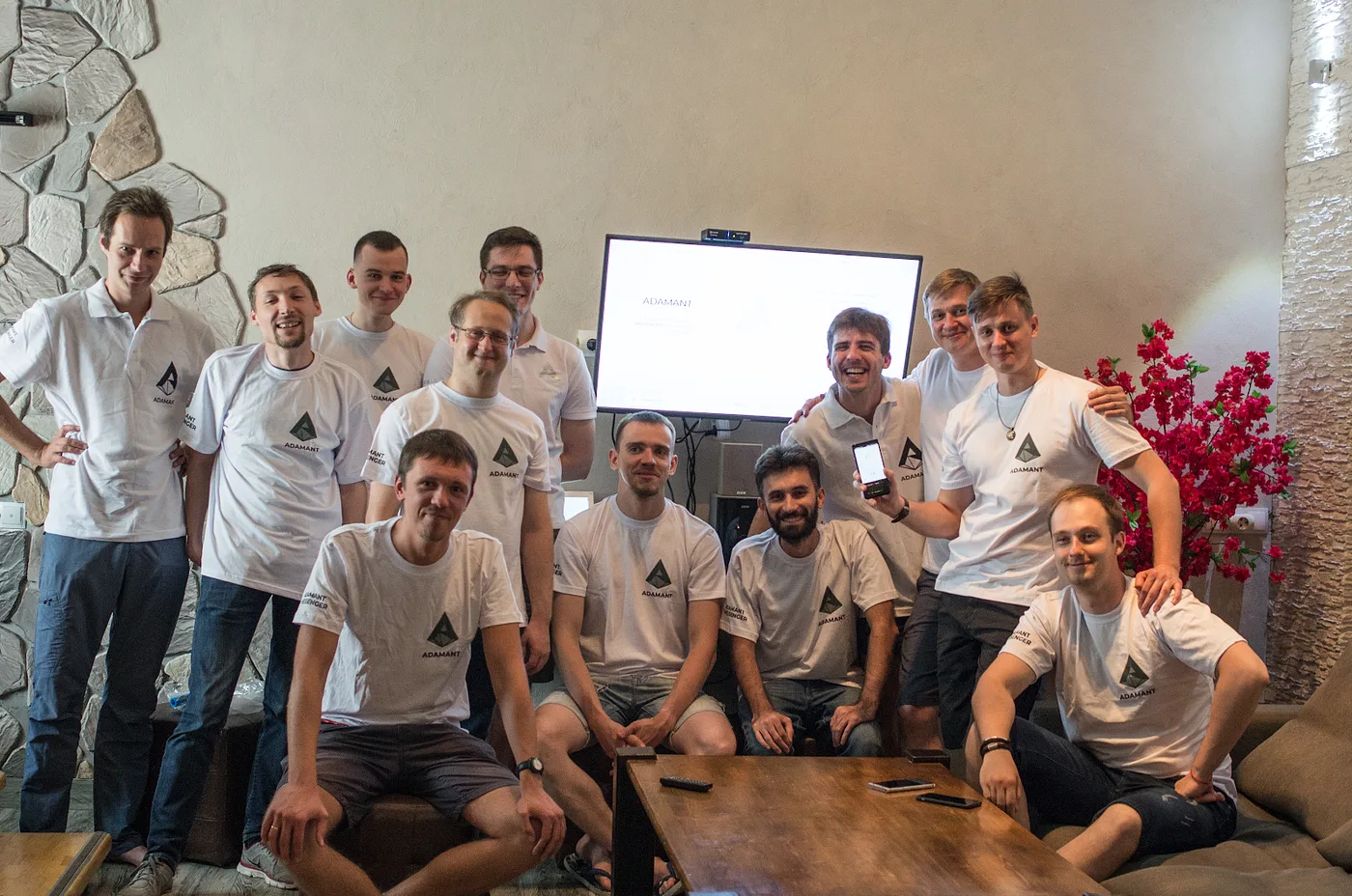
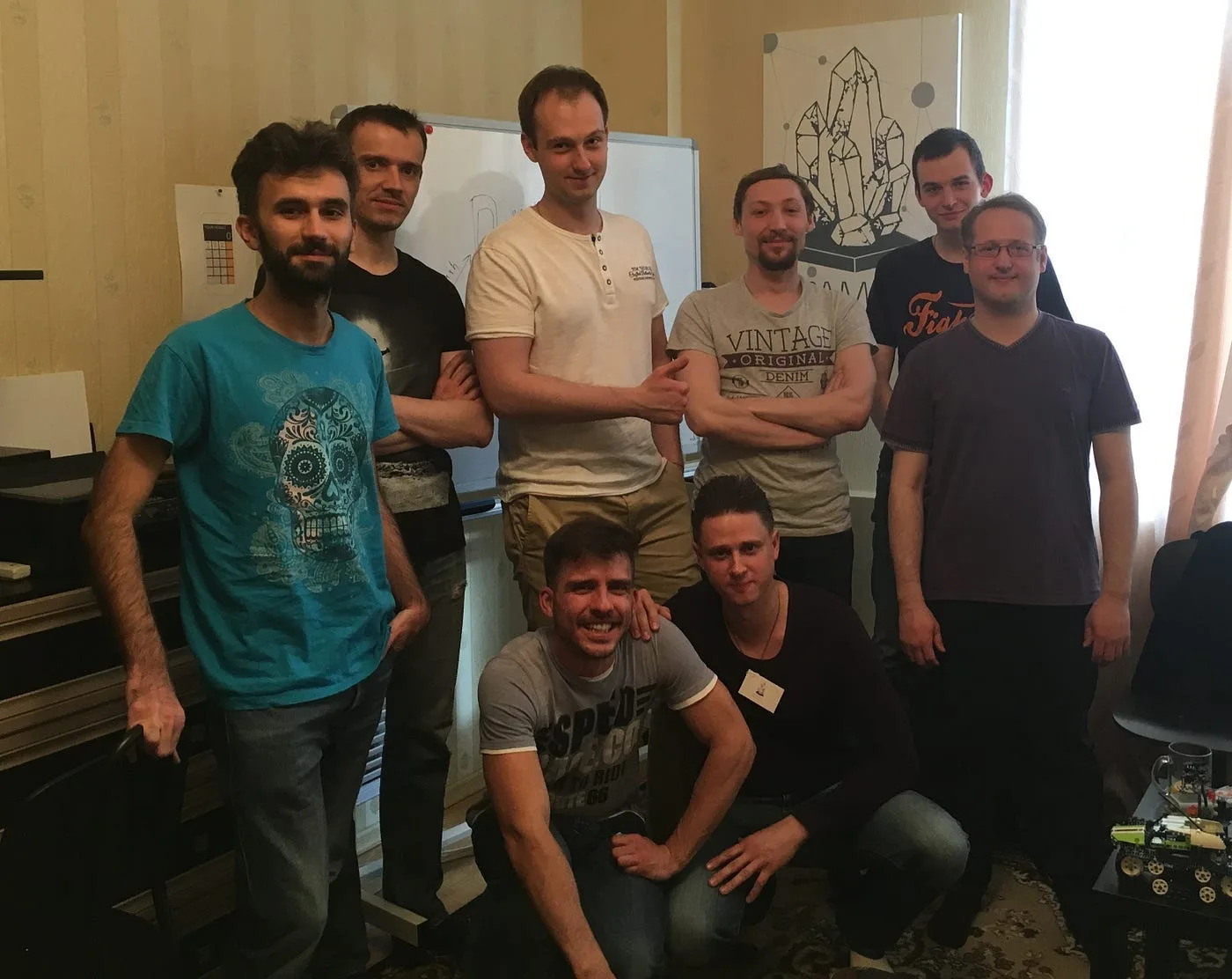
Where ideas and code collide: The contributor meet-up.
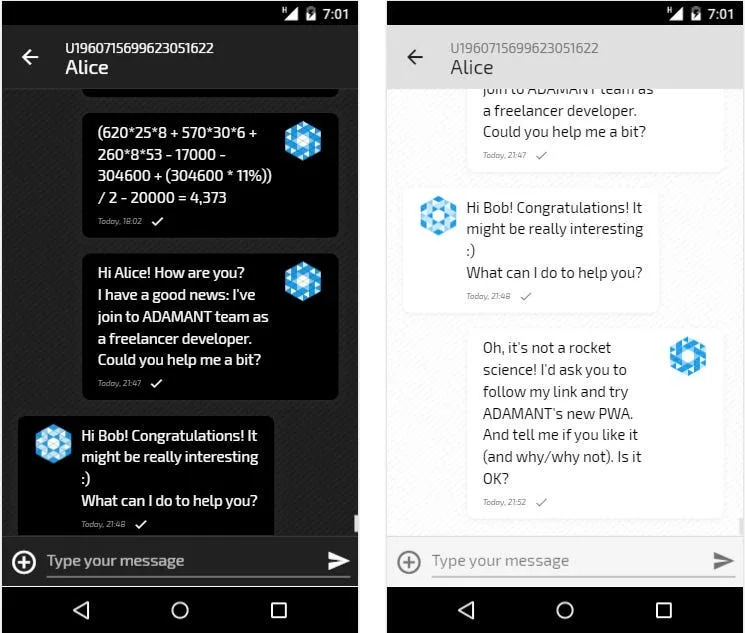
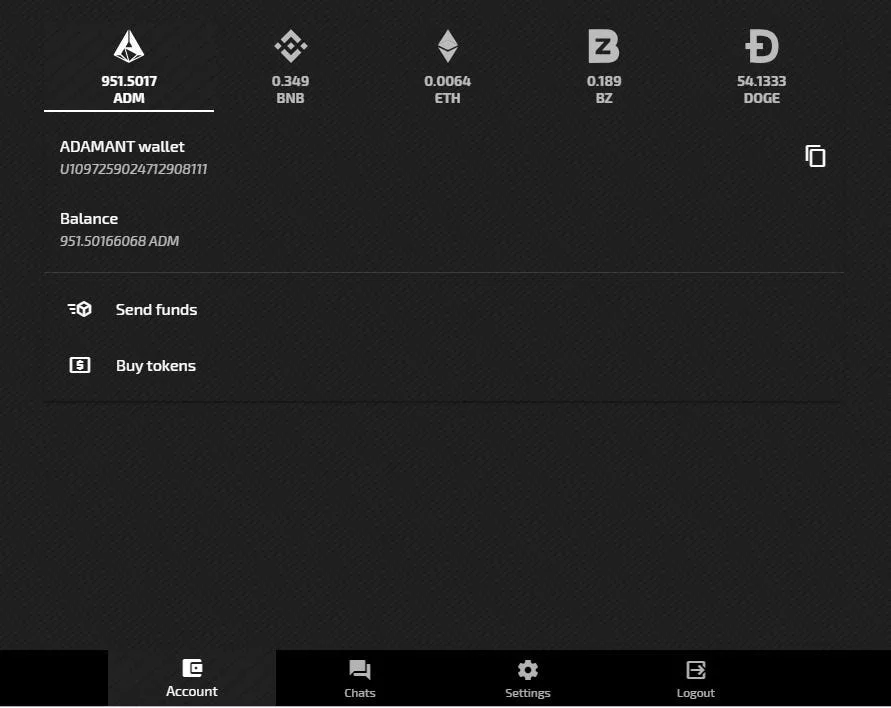
Screenshot of the PWA v2.0
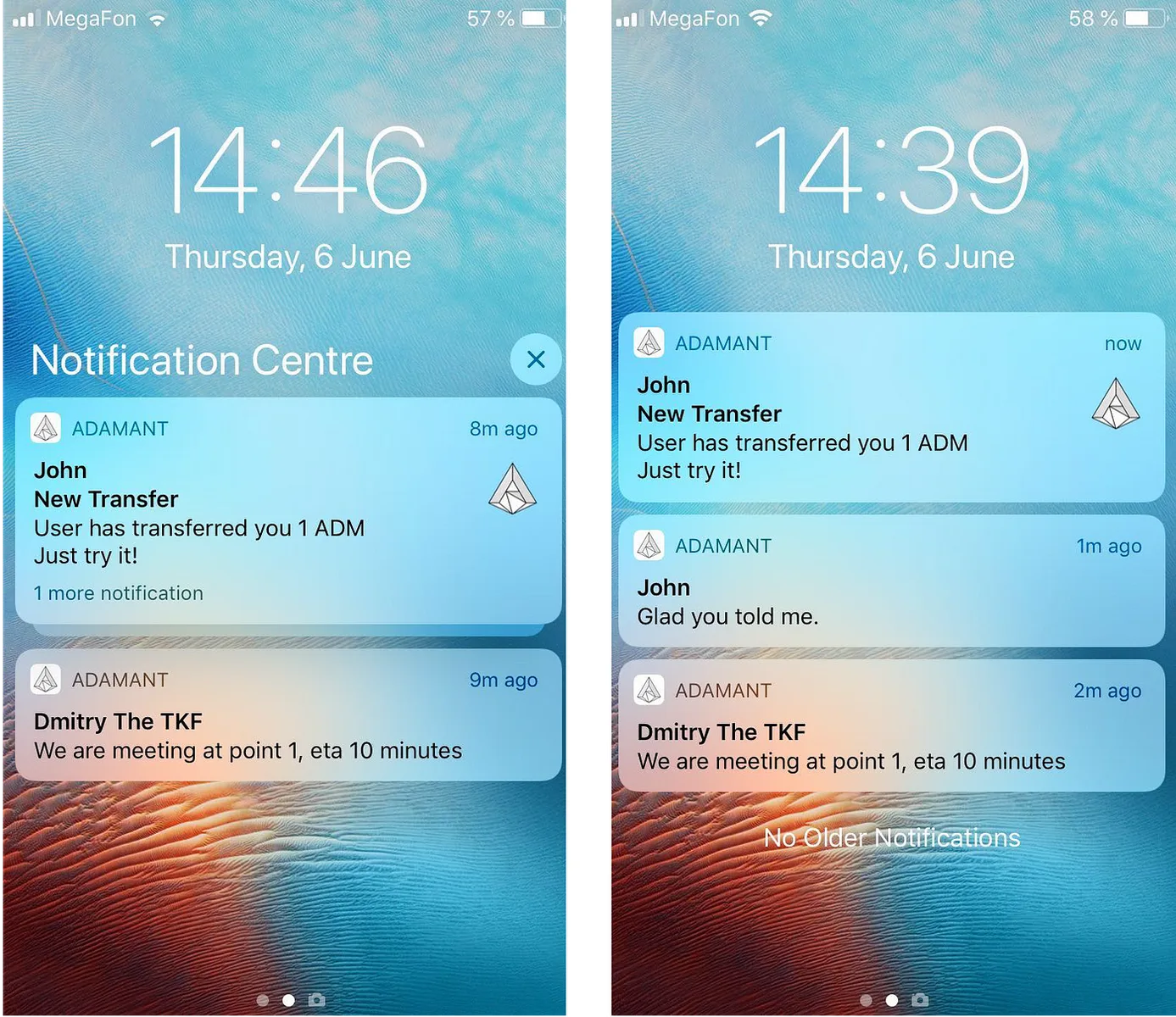
Push notifications were introduced in the iOS app back in 2019.
Q1 2024 → Q1 2025: A Year of Deepening Reliability
Q1 2025 marked the dissolution of the ADAMANT Foundation, transitioning the project fully to community-driven development — a milestone in its decentralization journey.
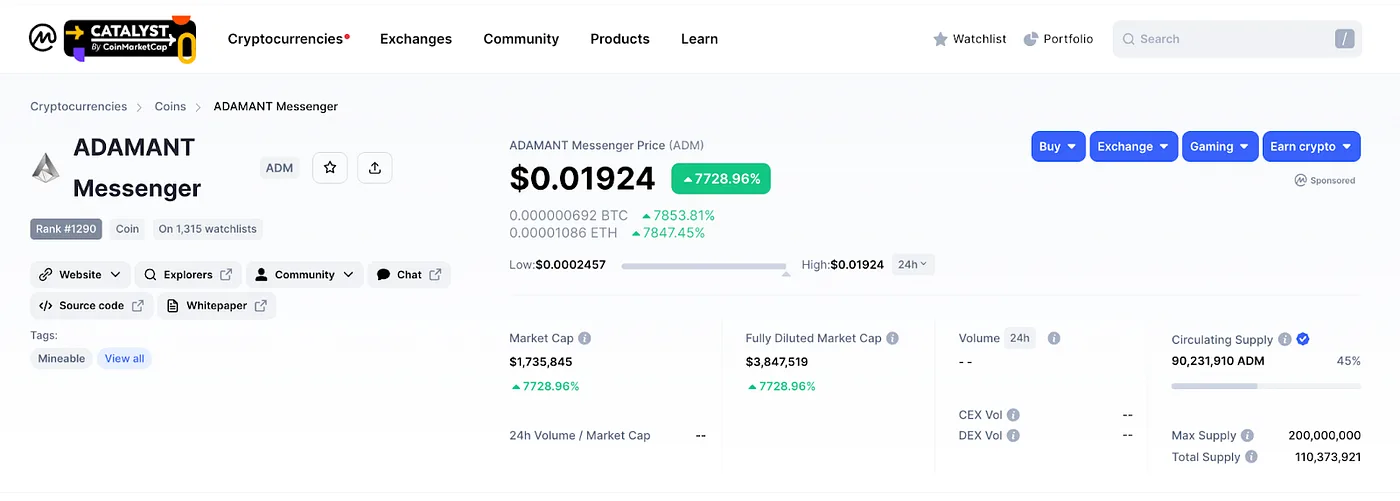
$ADM’s return to CoinMarketCap
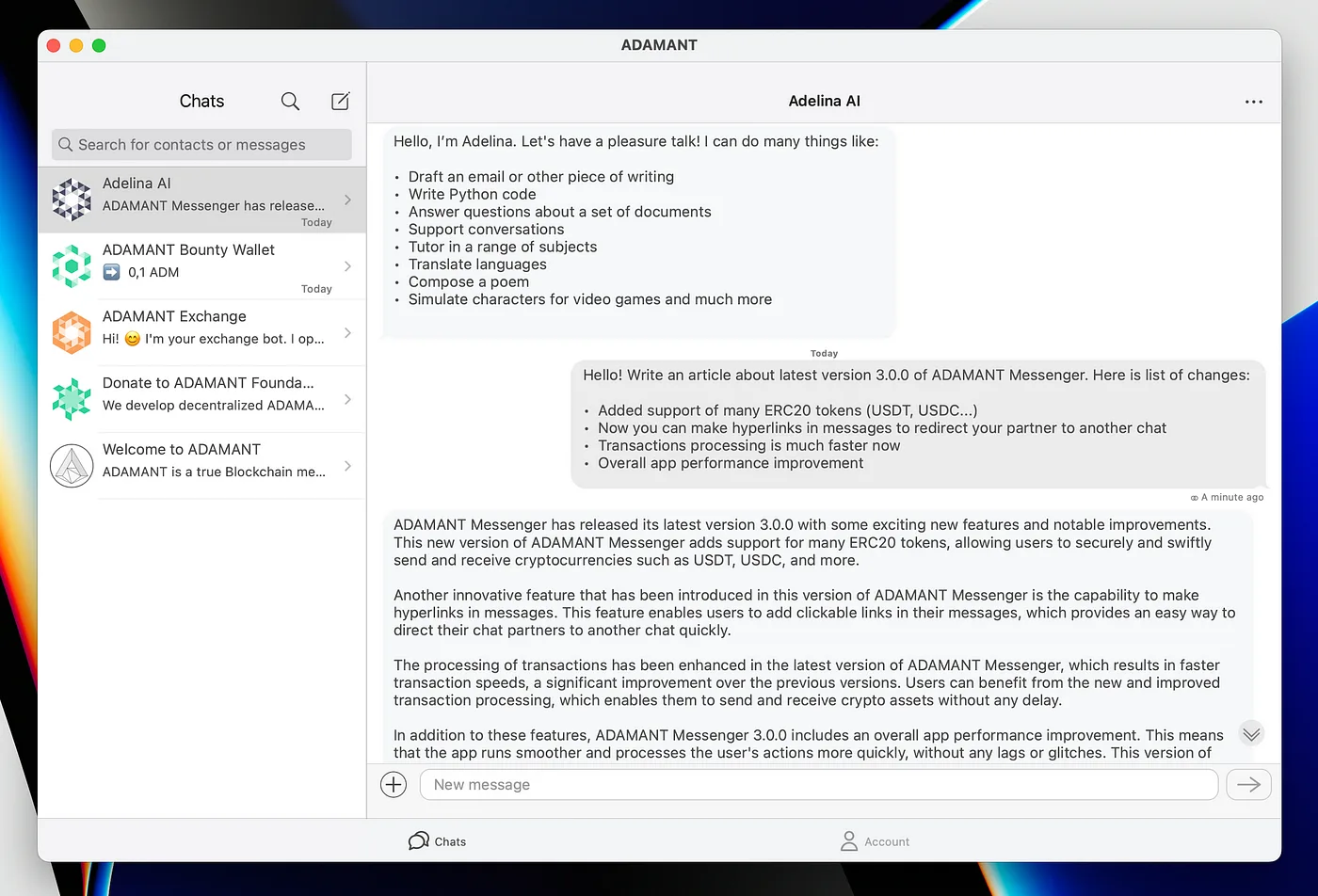
Messenger app v3.0 launched for Apple devices.
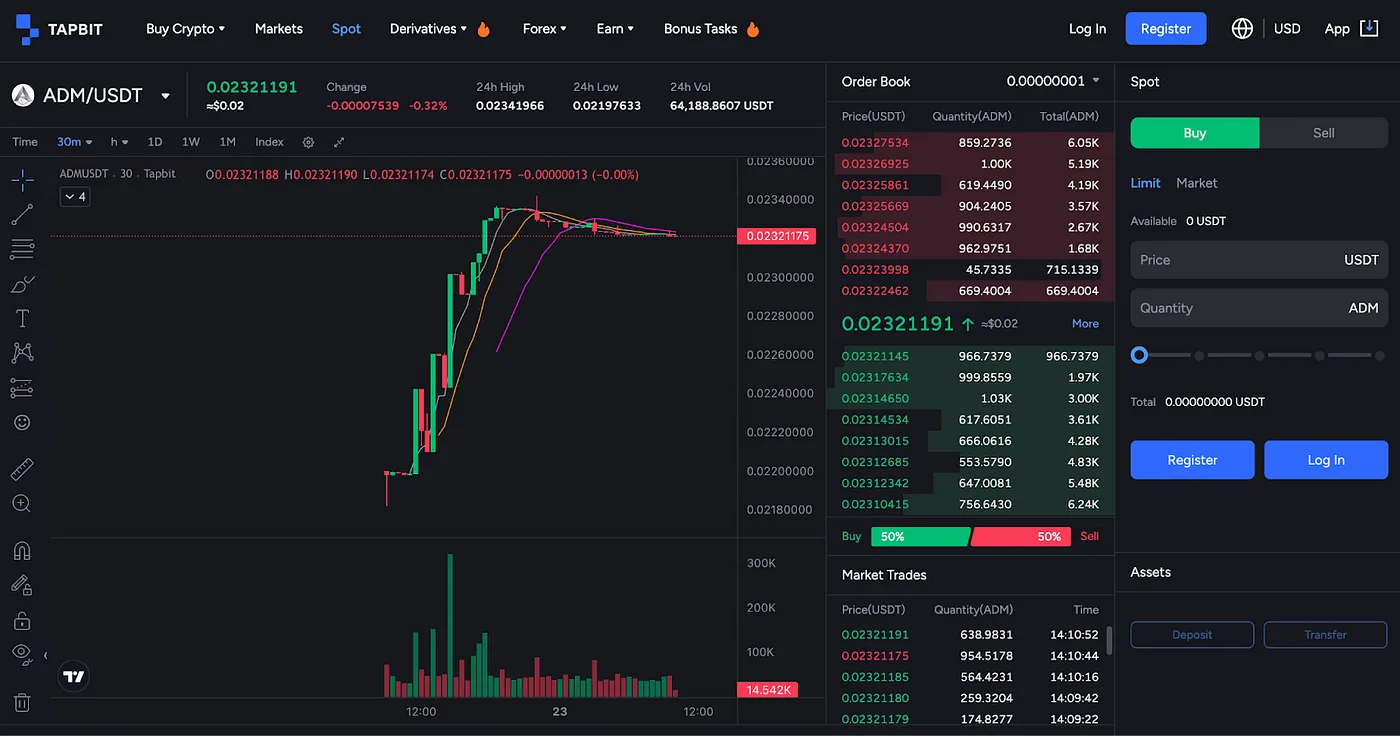
A listing streak: ADM hit new exchanges almost every month in 2024.
The last year was pivotal for expanding infrastructure and decentralization. PWA v4.5 and iOS v3.5–3.10 introduced wallet lists, stronger encryption, and IPFS file transfers. Major bot updates shipped for market-making (v6 and v7) and CoinOptimus (v2). Multiple ADM exchange listings followed (Biconomy, BigONE, Hotcoin, KoinBX, and more). Supporting products launched: MarketMaking.app, Currencyinfo.dev, and Console v3.0. JavaScript API v2.4, Node v0.9, and the Ethereum indexer v2.4.1 were released. IPFS integration arrived in iOS and PWA for decentralized file sharing, along with a partnership with Massa Chain and Messenger deployment in DeWeb and GitHub.

Recent minimalist website redesign
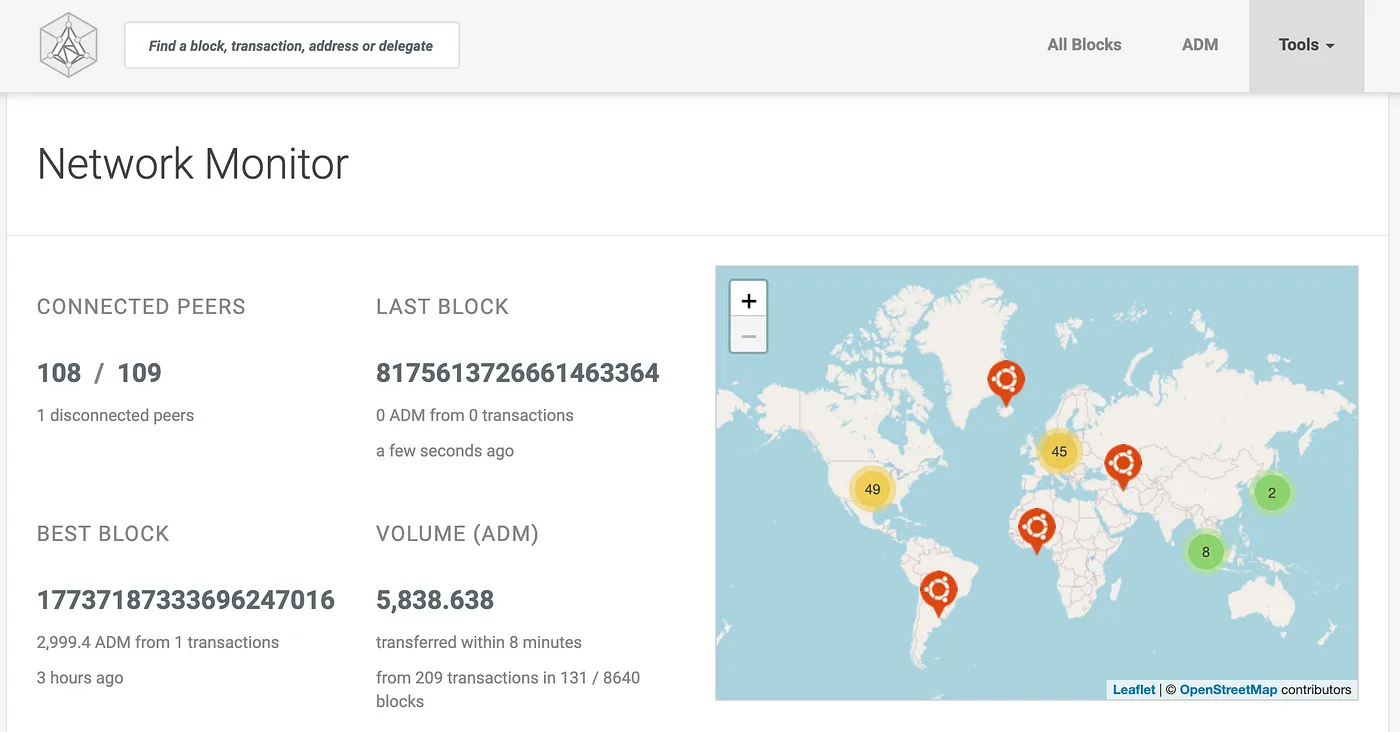
The ADAMANT network operates with 109 decentralized nodes.
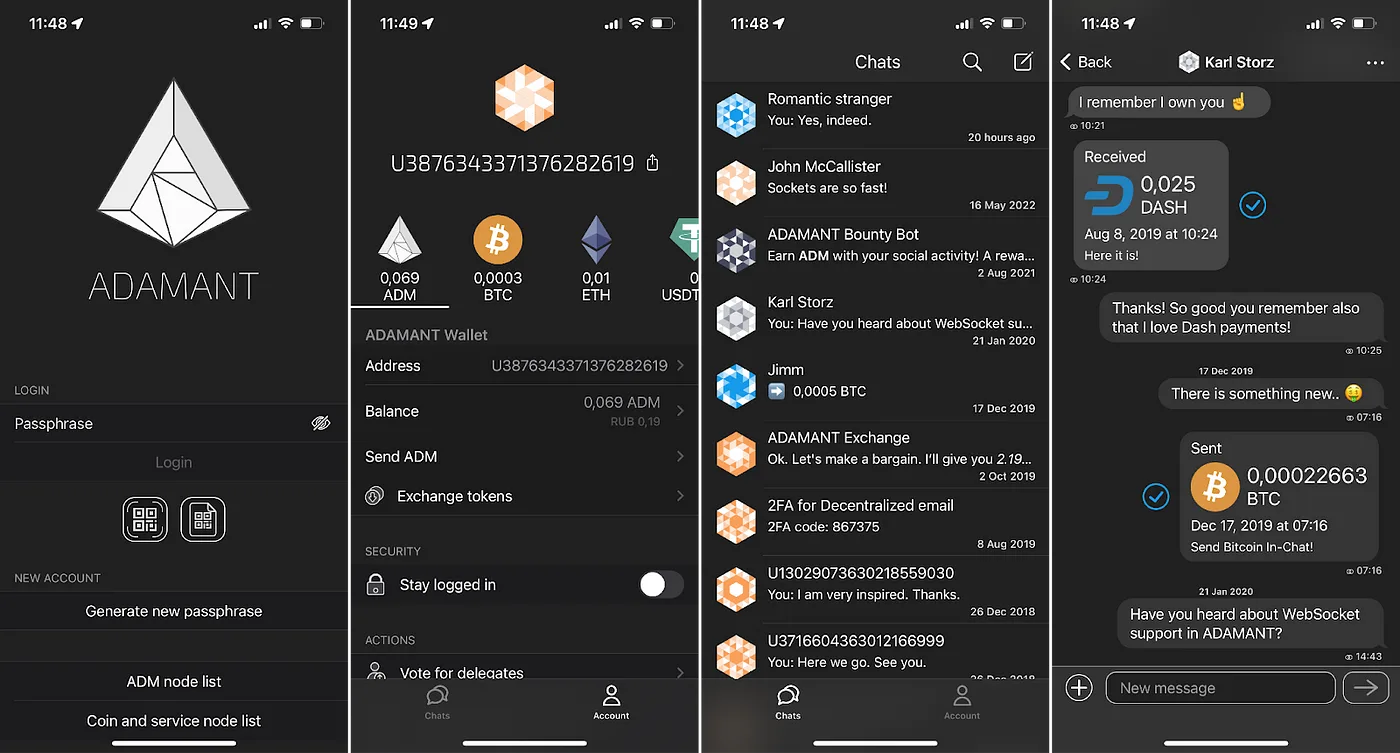
New look of the iOS app
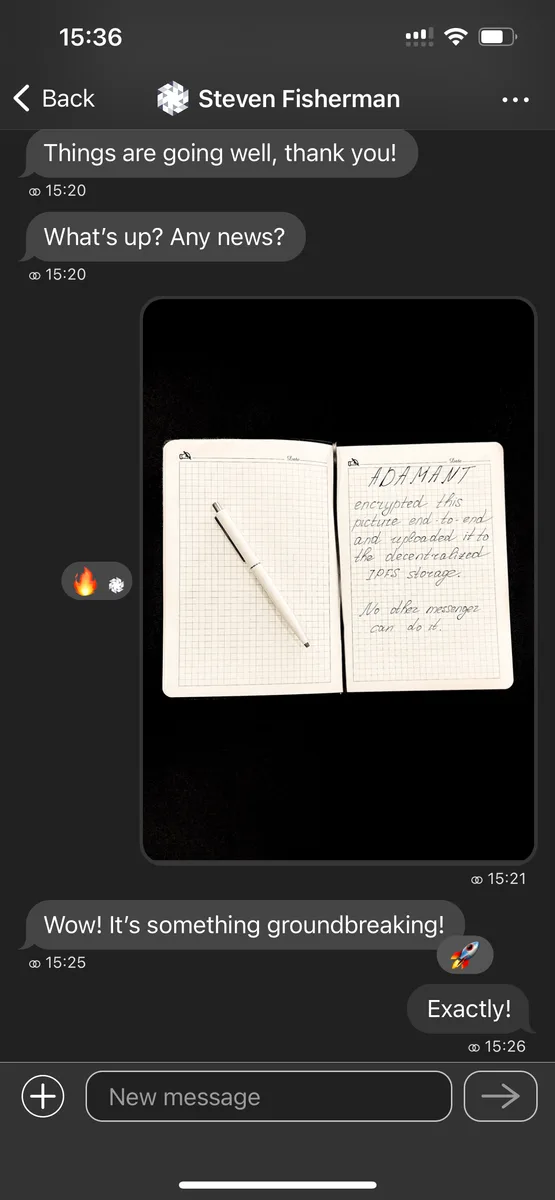
How decentralized file sharing was introduced.
Q2 2025 → Q1 2026: What Comes Next
By Q1 2026, users will have always-reachable, censorship-resistant messengers backed by faster nodes, protocol-level anti-spam, and first-class cold-storage support — all steered by an open community. More importantly, the target is free, more private messaging over existing blockchain bandwidth.
Q2 2025 focuses on censorship-resistant delivery and performance: partnership with Massa Chain for DeWeb hosting, WebSocket node-to-node protocol (Node 0.10), split-screen PWA 4.10, iOS 3.11 UX tweaks, first testnet PWAs, and extra download mirrors on GitHub and adm.im.
Upcoming split-screen view in ADAMANT Messenger.
Q3 2025 emphasizes reliability and automation: push notifications for PWA, local-storage fast login on iOS, the ADAMANT Notification Service (ANS), reproducible builds auto-deployed to Massa DeWeb, adm.im, and Google Play, Forging Pool 3.1, ADM Airdrop 3.0, the Currencyinfo.dev portal for developers, and groundwork for business integrations.
Q4 2025 brings freedom-first messaging: free, more private messaging over existing blockchain bandwidth, secret wallets and biometric login for PWA/iOS, WalletConnect on iOS, Explorer 2.0, anti-spam at the protocol level, and AIP-20 to introduce group chats and open the social layer.
Q1 2026 delivers cold-grade security and a fee overhaul: offline signing and cold-wallet mode for PWA, WalletConnect in PWA, AIP-19 to modernize fee calculation and cut delegate costs, on-chain group chat/channel prototypes, and a dedicated wallet website.
From Q2 2026 Onward: Vision & Stretch Goals (2026–2027)
Long-range possibilities, subject to community votes and funding, include deletable and pinnable chats, an ADAMANT Mixer for on-chain obfuscation, a secure note/password vault, a Bot Factory API, and a Tor-native site. Further out: Random Chat rollout, global advertising and sponsorship push, renewed pool promotions, deeper enterprise pilots, ADM on top-tier centralized exchanges, human-readable “ADAMANT Naming” addresses, a multi-account UI, blockchain-signed document vaults, voice calling, and a third-party security audit to certify the full stack.
The Road Ahead
The past year underscored ADAMANT’s capacity to ship complex features — IPFS transfers, WebSocket networking, self-healing health checks — while reinventing its governance. The upcoming four quarters focus on censorship resistance, flawless reliability, and frictionless onboarding. Beyond that, the roadmap sketches ambitious but attainable innovations in privacy, identity, and real-time communication.
ADAMANT continues to evolve, with an increasingly engaged community steering the helm — turning the “possible” column of its roadmap into everyday features, one quarter at a time.
Roadmap: https://adamant.im/roadmap
X (Twitter): @adamant_im