Building a Utility Token for Your Software Product: Platform Comparison and Implementation Guide
Why Create a Utility Token
Utility tokens let software products incentivize usage, reward activity, gate premium features, and enable in-app economies. A browser might reward users for ad views, a VPN for uptime, a productivity app for daily goals, or a CRM for conversions. Beyond engagement, tokenization reduces reliance on centralized billing, enables cross-border microtransactions, and automates reward distribution through smart contracts or protocol-level logic.
Tokenomics Planning
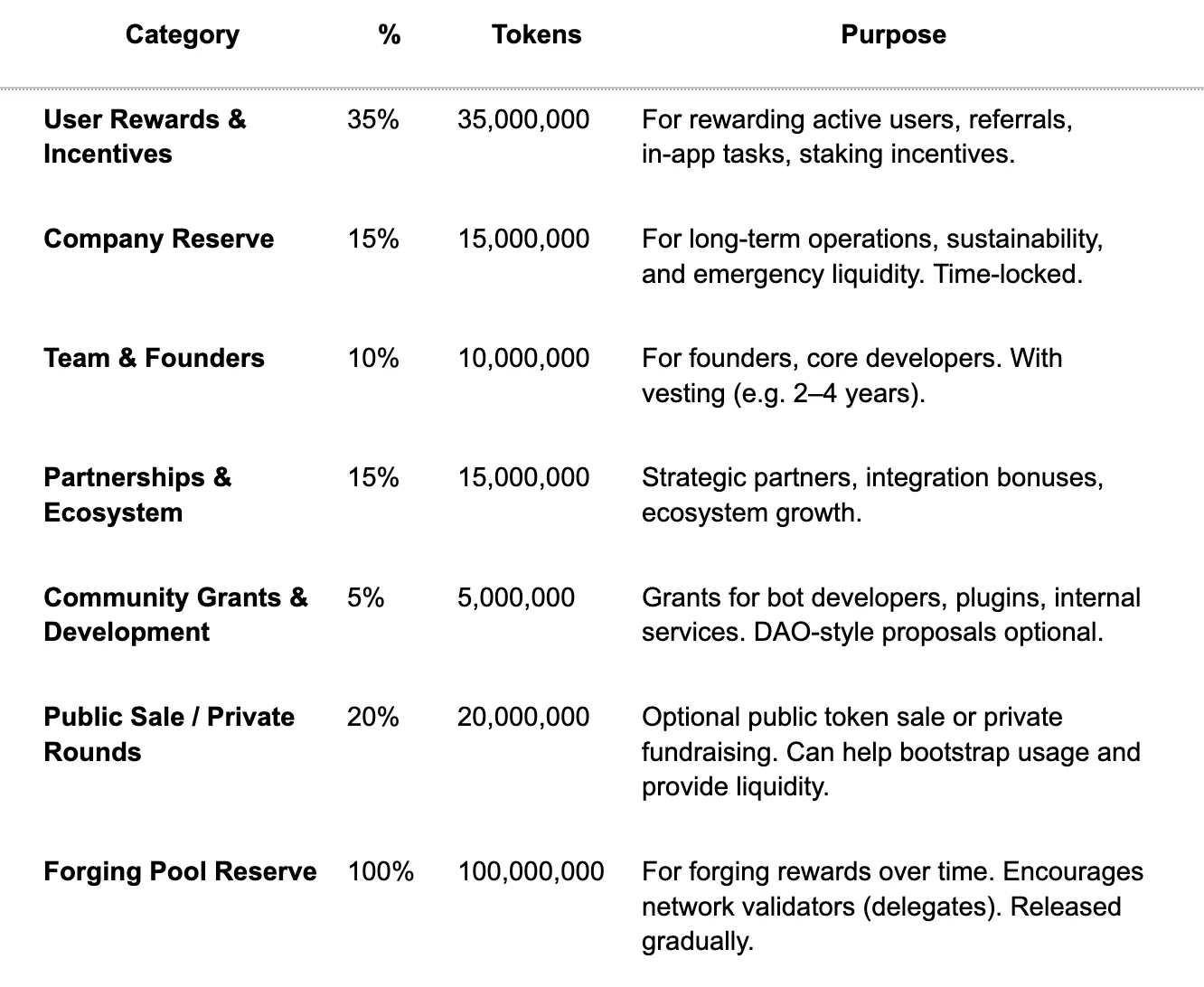
A well-designed token needs a clear purpose (rewards, access control, governance, payments, or proof of usage), a defined supply model (fixed or inflationary, pre-minted or forged), and a distribution strategy covering airdrops, internal campaigns, and exchange listings. Vesting schedules matter: team tokens typically use a four-year vesting with a one-year cliff, while company reserves may lock for two years before linear release. Burning mechanisms and circulation scope—whether tokens stay internal or trade externally—should be decided early.
A realistic model for a 200M max-supply token might pre-mine 100M and reserve 100M for a forging pool released gradually over decades via a delegated Proof-of-Stake mechanism. Token holders vote for delegates who produce blocks and optionally share rewards with voters, keeping inflation low and predictable.
Platform Comparison
Choosing a blockchain platform affects scalability, cost, customization, and user experience. The platforms most relevant for utility token projects include Ethereum, Binance Smart Chain (BSC), Solana, Bitcoin forks, TON, Massa, BitDiamond v4, Klayr sidechains, and ADAMANT Business.
Scalability. Ethereum offers moderate throughput constrained by legacy architecture, though Layer 2s help. BSC achieves high TPS through centralized validators. Solana delivers extremely high throughput but has suffered network outages. Bitcoin forks are not scalable for real-time utility tokens due to slow block times and low capacity. TON promises future scalability via sharding. Massa uses a multi-threaded block graph for high throughput. BitDiamond handles at least 400 TPS through parallel processing. Klayr sidechains offer medium scalability sufficient for most apps. ADAMANT Business provides adjustable block times and transactions-per-block, adequate for internal utility tokens.
Security. Ethereum is highly secure through broad decentralization and battle-tested infrastructure, though smart contract exploits remain a risk. BSC’s smaller validator set increases collusion vulnerability. Solana has had historical bugs and outages. Bitcoin forks are secure only with sufficient hashing power, which fork projects often lack. Massa uses a custom PoS with randomized slot selection and block endorsements. BitDiamond employs asynchronous Byzantine Fault Tolerance via HBBFT. Klayr sidechain security depends on parent-chain anchoring. ADAMANT Business uses fair dPoS with secure architecture, though full security requires many independent nodes.
Decentralization. Ethereum leads with thousands of permissionless nodes. BSC and Solana have low decentralization with controlled validator sets. TON uses permissioned validators. Massa resists centralization by allowing consumer-grade hardware nodes. BitDiamond is DAO-governed but not yet time-proven. Klayr offers medium, customizable decentralization. ADAMANT Business lets you choose anywhere from fully owned to fully decentralized operation.
Transaction Fees. Ethereum fees can spike, making micropayments impractical. BSC and Solana offer low fees. Bitcoin fork fees vary widely. TON has low but opaque pricing. Massa and BitDiamond offer low, predictable fees. Klayr fees are low and adjustable. ADAMANT Business fees can be extremely low or zero, fully customizable per transaction type, with no external validators or miners to pay.
Customizability. Ethereum, BSC, Solana, TON, Massa, and BitDiamond offer smart-contract-level flexibility but don’t allow modifying core protocol parameters like block time or consensus. Bitcoin forks allow protocol adjustments but limited logic. Klayr sidechains are highly customizable for JavaScript developers but lack smart contracts. ADAMANT Business allows adjusting any blockchain parameter—block times, fees, delegate structure—but does not support smart contracts.
Transaction Types. EVM chains and Solana support standard transfers, NFTs, and arbitrary contract calls. Bitcoin forks support only plain transfers. Klayr supports token creation, voting, and asset tracking out of the box. ADAMANT Business supports transfers, messaging, data storage, in-chat payments, delegate registration, and voting natively, with new transaction types requiring blockchain updates.
Ecosystem and Wallets. Ethereum has the largest ecosystem with MetaMask, Uniswap, and thousands of tools. BSC is compatible with most Ethereum tools. Solana’s ecosystem is growing with Phantom and Solflare. Bitcoin forks require custom wallet solutions. TON’s ecosystem is growing but behind Ethereum. Massa has early-stage SDKs, a wallet, DEX, and NFT marketplace. BitDiamond is EVM-compatible but its mainnet is not yet live. Klayr is in transition. ADAMANT Business is not EVM-compatible but provides explorer, forging pool software, API libraries, IPFS node software, wallet and messaging apps, push services, airdrop tools, CLI tools, exchange bots, and AI bots, with built-in BTC, ETH, DOGE, KLY, DASH, and ERC-20 wallets.
Interoperability. Ethereum is the central hub for cross-chain bridges and Layer 2 integration. BSC shares EVM compatibility and robust bridging. Solana relies on third-party bridges with some security concerns. Bitcoin forks have minimal interoperability. TON has in-protocol bridging in development. Massa has Ethereum and BSC bridge support. BitDiamond is fully EVM-compatible. Klayr uses the Lisk Interoperability Protocol for internal sidechain communication but lacks external chain support. ADAMANT Business is intentionally isolated for privacy, though all business chains share the same passphrase and address derivation, enabling seamless onboarding and airdrops to the existing ADAMANT user base.
Open Source. Ethereum, Massa, BitDiamond, Klayr, and ADAMANT Business are fully open source. BSC is partially open. Solana is mostly open. TON is not fully open.
Cost of Ownership. Ethereum token launches are low-cost for standard tokens but expensive for custom features, audits, and gas. BSC and Solana are similar with lower fees. Bitcoin forks have high infrastructure and maintenance costs. TON requires advanced knowledge. Massa and BitDiamond resemble Ethereum with lower fees. Klayr requires JavaScript developers and moderate infrastructure costs. ADAMANT Business is comparable to Klayr for setup but more cost-effective when leveraging the existing ecosystem. All projects must also budget for exchange listings, liquidity, market-making, legal, and community management.
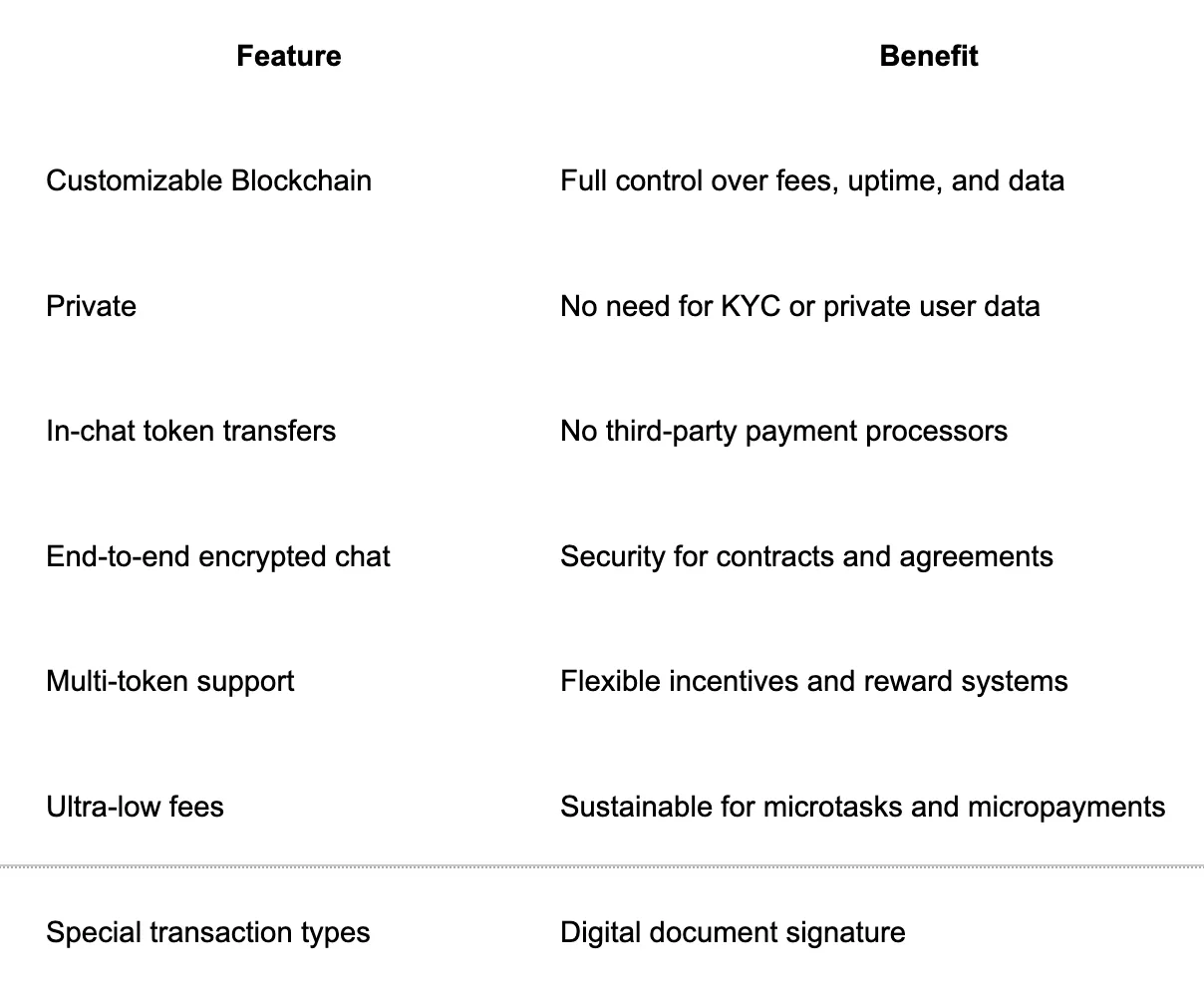
Messaging. None of the EVM chains, Solana, Bitcoin, TON, Massa, BitDiamond, or Klayr natively support messaging. ADAMANT Business includes a built-in blockchain-based messaging system with end-to-end encryption as a core transaction type, not a plugin.
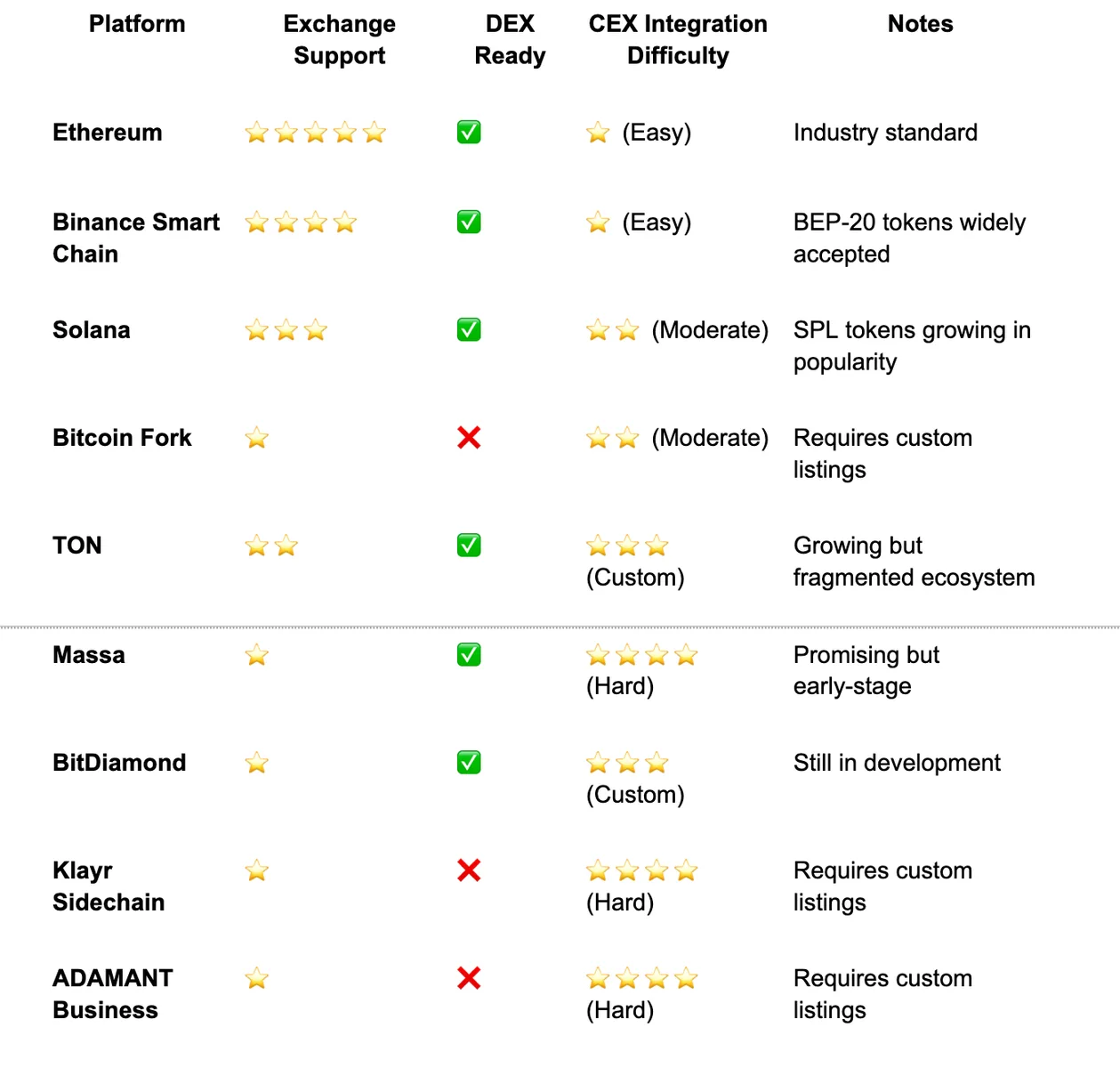
Exchange Listing. Ethereum’s ERC-20 is near-universal across CEXs and DEXs. BSC’s BEP-20 is widely supported. Solana’s SPL tokens have growing but not universal support. Bitcoin forks lack a token-layer standard. TON’s Jetton standard requires custom handling. Massa has limited exchange support. BitDiamond is not yet supported. Klayr requires custom integrations. ADAMANT Business requires exchange-side technical integration; several exchanges already list ADM and could list business-chain tokens.
Platform Recommendations by Use Case
Ethereum suits financial services, real estate tokenization, and NFT marketplaces needing deep liquidity. BSC fits VPN services, mobile games, and freelance platforms needing low-cost transactions. Solana targets high-frequency trading apps and real-time platforms. Bitcoin forks work for simple payment gateways and remittances. TON is ideal for Telegram-native consumer apps and in-chat wallets. Massa suits decentralized hosting and privacy-focused DAOs. BitDiamond fits projects migrating from Ethereum with lower fees. Klayr serves enterprise applications needing JavaScript-based custom sidechains. ADAMANT Business fits privacy-first businesses, internal token economies, and platforms needing built-in secure messaging alongside payments.
Case Study: Freelance Marketplace
A freelance marketplace wants to tokenize payments, improve escrow reliability, reduce processing fees, and add secure communication—all without fully decentralizing dispute resolution. The platform needs reliable escrow, low-cost payments without KYC, private real-time messaging, and a reputation system.
Ethereum is disqualified by high fees. BSC and Solana are possible but lack native messaging and internal operations tooling. Bitcoin forks are too limited. TON is promising for Telegram audiences but lacks core privacy and independence. Massa may work but has high development costs and no built-in messaging. BitDiamond is not yet available. Klayr is in transition. ADAMANT Business fits all requirements: it provides tokenized escrow with in-chat crypto transfers (supporting the native token plus BTC, ETH, DOGE, DASH, ADM, and ERC-20s), built-in end-to-end encrypted messaging using Curve25519 with Salsa20 and Poly1305, customizable reward systems, self-hosted infrastructure with low maintenance costs, and no dependency on external APIs.
Market-Making Considerations
Market-making ensures token liquidity and healthy exchange activity. On CEXs, the underlying blockchain platform doesn’t affect market-making since the software works directly with exchange APIs. Self-hosted solutions like MarketMaking.app support major exchanges and offer dynamic order book building, spread maintenance, price range setting, and arbitrage without monthly fees. DEX market-making is less common and better supported on Ethereum and BSC, while other chains require custom solutions.
Conclusion
Public chains like Ethereum and Solana offer exposure but come with uncontrollable costs, complex maintenance, and limited customization. For software creators who need cost-effective, customizable infrastructure with built-in messaging and native utility token support, ADAMANT Business provides a practical foundation that general IT staff can deploy without specialized blockchain consultants.