Meet adamant-api 3.0 — a modern SDK for the modern ADAMANT node
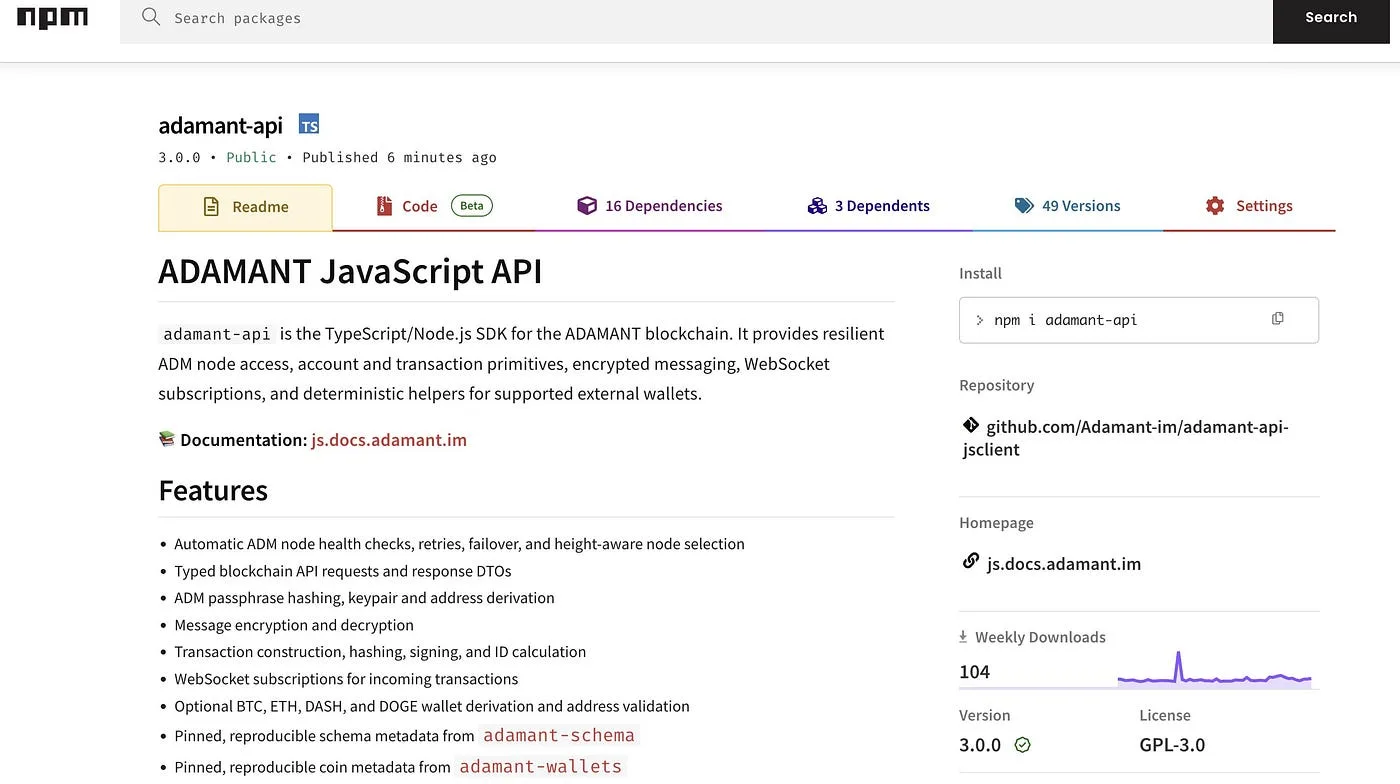
The adamant-api JavaScript/TypeScript SDK has released version 3.0.0, designed to work seamlessly with ADAMANT Node v0.10.0. This release introduces millisecond timestamps, richer query parameters, consolidated node-status responses, and inclusive minimum-version filtering. The SDK provides automatic health checks, retries, failover, typed responses, encrypted messaging, and real-time WebSocket subscriptions.
ADAMANT is a blockchain-based, end-to-end encrypted messenger with a built-in crypto wallet that requires no phone number or central server. The adamant-api SDK abstracts the network into clean function calls, allowing developers to build decentralized bots, tip jars, and wallets where users own their identity and funds.
What’s New in 3.0
The SDK’s API data transfer objects are regenerated from a pinned adamant-schema revision, ensuring correct typing for millisecond timestamps, loader/status data, and nullable unconfirmed-transaction fields. Query capabilities now include returnUnconfirmed, includeDirectTransfers, delegate lookup by address, and multi-type transaction queries. Transaction filters combine with logical and by default, and amount filters apply only to transfer transactions. Optional timestampMs construction and getEpochTimeMs() are available, though timestampMs is not part of the signed bytes, leaving hashes, IDs, and signatures unchanged.
Reliability improvements include stopping retry loops for explicitly rejected POSTs, returning structured non-retryable errors instead. Retry and active-node failover are preserved for safe requests and network failures. Height-aware node selection and inclusive minVersion filtering ensure communication with healthy, up-to-date nodes.
A real WebSocket client allows subscribing to multiple addresses, transaction types, and chat asset types over a single connection. It features typed connection errors, reconnection callbacks, explicit connect()/disconnect(), listener cleanup, and bounded reconnection.
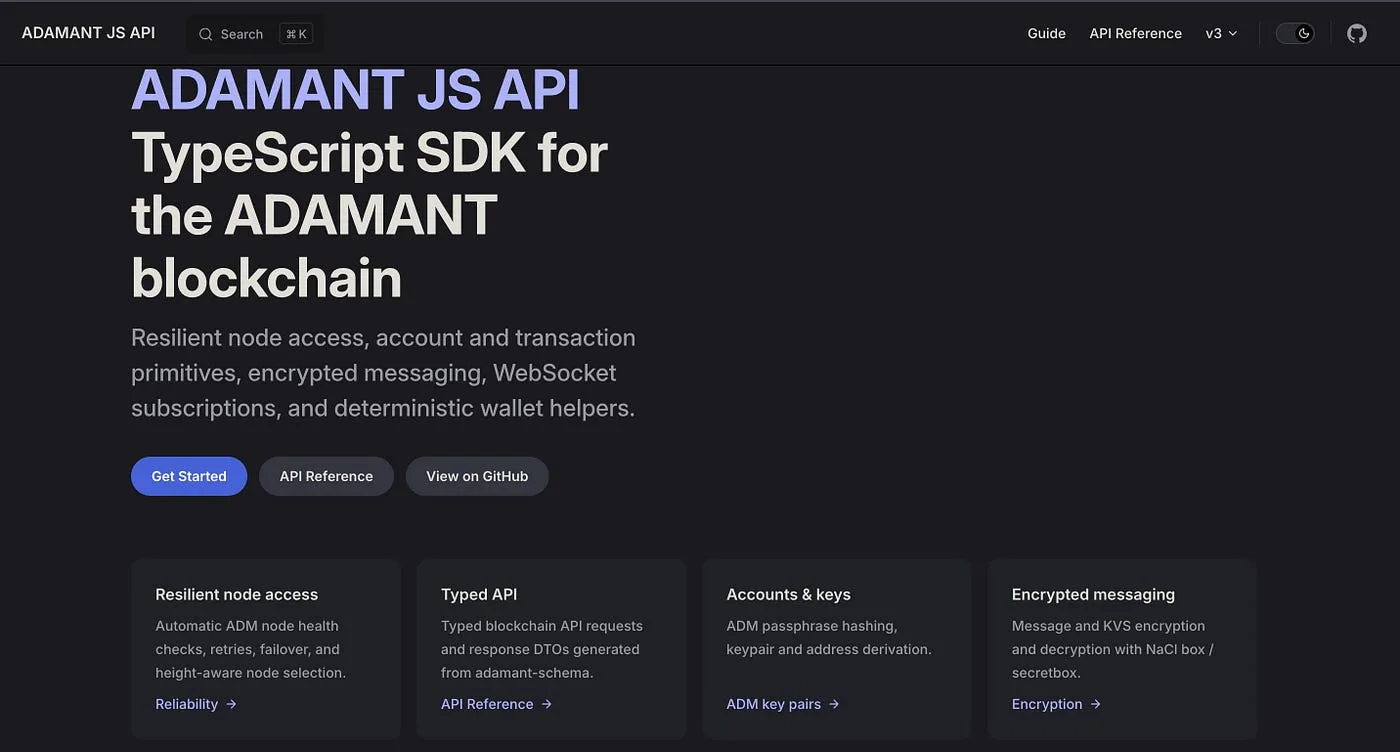
The package is now modular by design. The root package stays ADM-focused, while subpath exports provide access to API DTOs, transactions, metadata, and BTC/ETH/DASH/DOGE helpers for both CommonJS and ESM. Coin metadata is deterministic and pinned from adamant-wallets. Documentation has moved to a source-controlled VitePress + TypeDoc site.
Quick Start
Install the package and initialize the client with a list of nodes. Health checks, retries, and failover are handled automatically.
import {AdamantApi} from 'adamant-api';

const api = new AdamantApi({
  nodes: [
    'https://endless.adamant.im',
    'https://clown.adamant.im',
    'https://lake.adamant.im',
  ],
  checkHealthAtStartup: true,
  minVersion: '0.10.0', // inclusive — older nodes are excluded automatically
});

api.onReady(async () => {
  const response = await api.getBlocks();
  if (response.success) {
    console.log(response.blocks);
  } else {
    console.error(response.errorMessage);
  }
});
Use Cases
You can build a decentralized chat bot that watches accounts in real time and responds to encrypted messages. End-to-end encryption is built in; the bot decrypts messages with its own passphrase, and the server never stores plaintext.
import {AdamantApi, WebSocketClient, decodeMessage} from 'adamant-api';
import {config} from './config.js';

const api = new AdamantApi({nodes: config.nodes});

const ws = new WebSocketClient({
  admAddress: config.address,
  direction: 'incoming', // only messages sent *to* the bot
});
api.initSocket(ws);

ws.onMessage(async (tx) => {
  const text = decodeMessage(
    tx.asset.chat.message,
    tx.senderPublicKey,
    config.passphrase,
    tx.asset.chat.own_message,
  );

  if (text.trim() === '/ping') {
    await api.sendMessage(config.passphrase, tx.senderId, 'pong 🏓');
  }
});
For a crypto tip jar or payment bot, you can react to incoming token transfers and send tokens back. A single WebSocket connection can also watch many addresses and filter by type, which is useful for exchange ingest or accounting dashboards.
If you need a lightweight multi-coin wallet, you can derive BTC, ETH, DASH, or DOGE addresses from the same ADAMANT passphrase without bundling multiple crypto stacks into your ADM-only bot. Import exactly what you need via subpath exports to keep serverless bundles small.
import {eth} from 'adamant-api/coins/eth';
import {btc} from 'adamant-api/coins/btc';

const {address: ethAddress} = eth.keys(process.env.PASSPHRASE);
const {address: btcAddress} = btc.keys(process.env.PASSPHRASE);

console.log({ethAddress, btcAddress});
Migrating from 2.x
To migrate, bump Node to version 22 or higher in your runtime and CI. Audit WebSocket direction, adding direction: 'incoming' if your app assumed incoming-only. Update coin imports to adamant-api/coins/*, drop Lisk/Klayr code paths, and re-check query filters for the new logical-and default, swapping withoutDirectTransfers for includeDirectTransfers. Signing, transaction IDs, and CommonJS/ESM imports remain untouched.