Roskomnadzor's Attempt to Censor ADAMANT Messenger: A Test of Decentralization
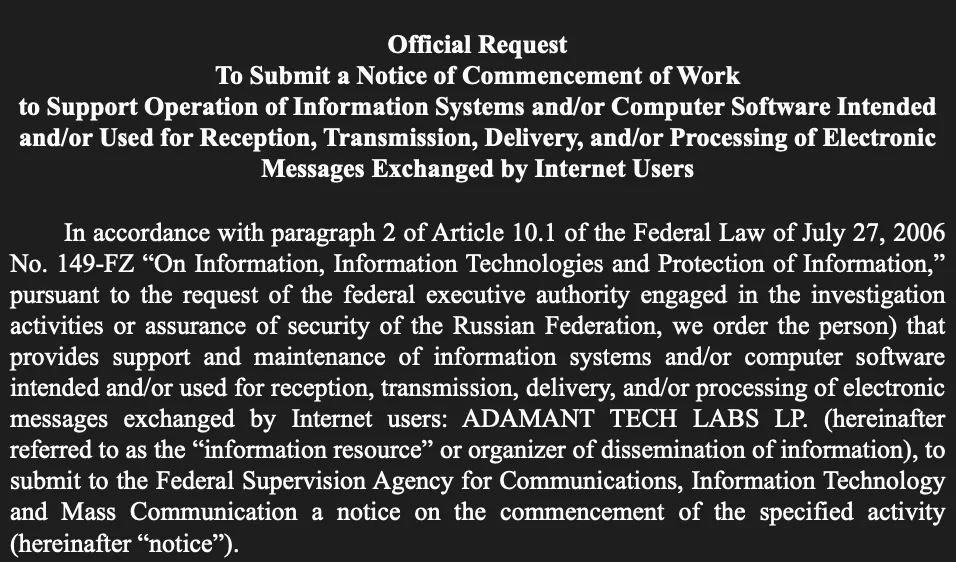
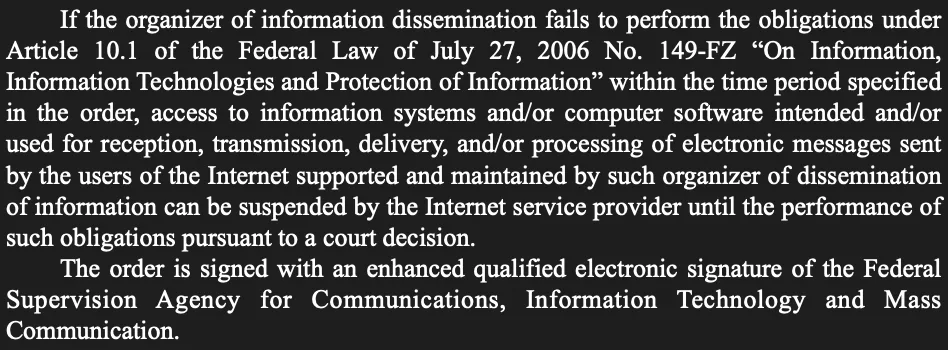
Roskomnadzor, the Russian federal media oversight body, has attempted to block the ADAMANT Messenger website. According to the ADAMANT team, the action has only underscored the resilience of decentralization, as the platform’s architecture leaves no central point of control to target.
Why censorship is impractical against ADAMANT
ADAMANT Messenger uses blockchain technology to provide a communication platform independent of third-party infrastructure. Unlike conventional messaging apps that store data on centralized servers, ADAMANT distributes messages across a network of independently operated nodes. There is no central server to shut down and no single organization that controls the data.
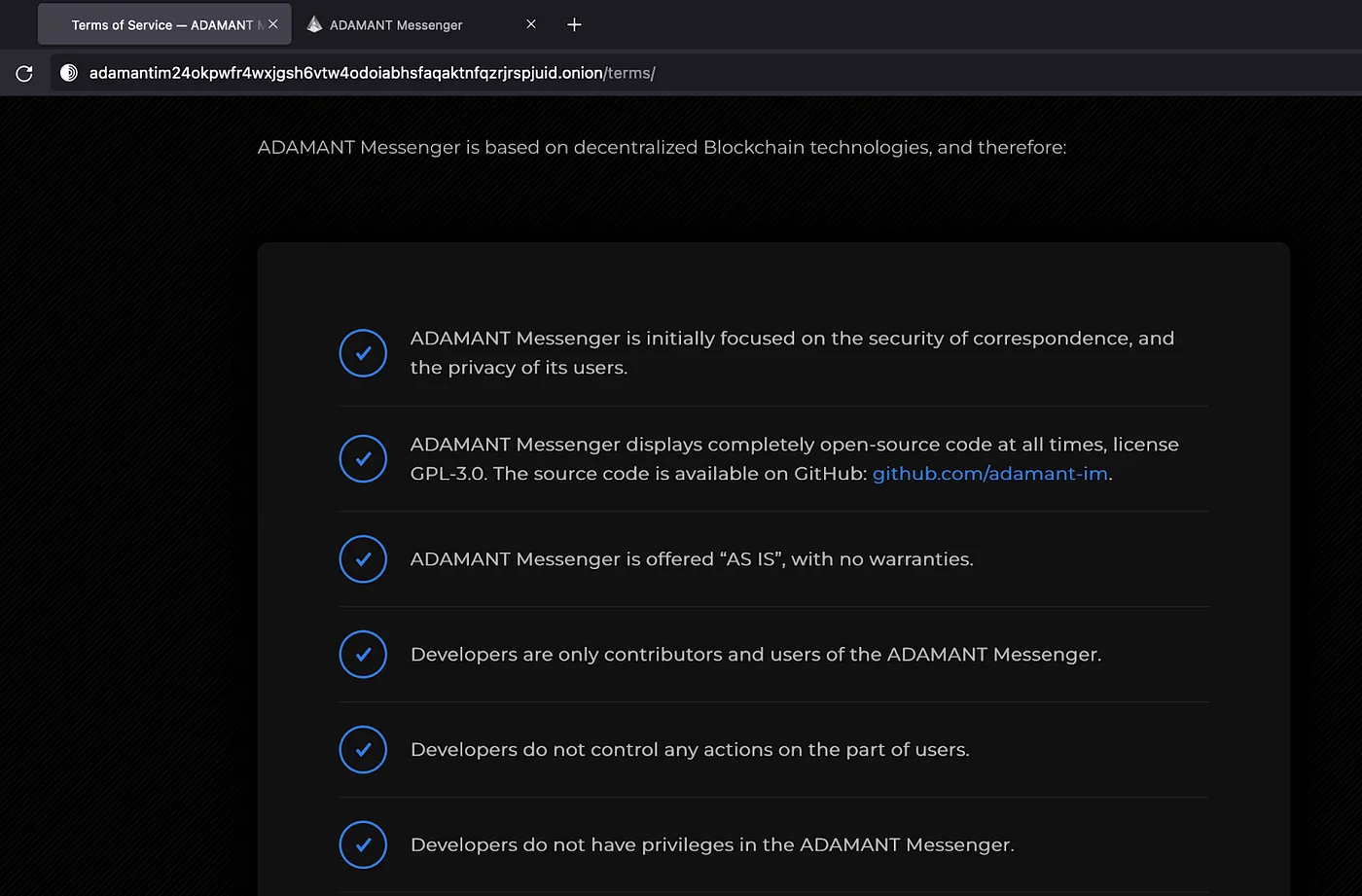
The ADAMANT team’s response was direct: “Censorship is impossible. ADAMANT is a true decentralized protocol. It’s not just a claim, but a feature designed into the fabric of our platform.” These properties are documented in the platform’s Terms of Service, available both on the clearnet and via Tor.
The ADAMANT Foundation
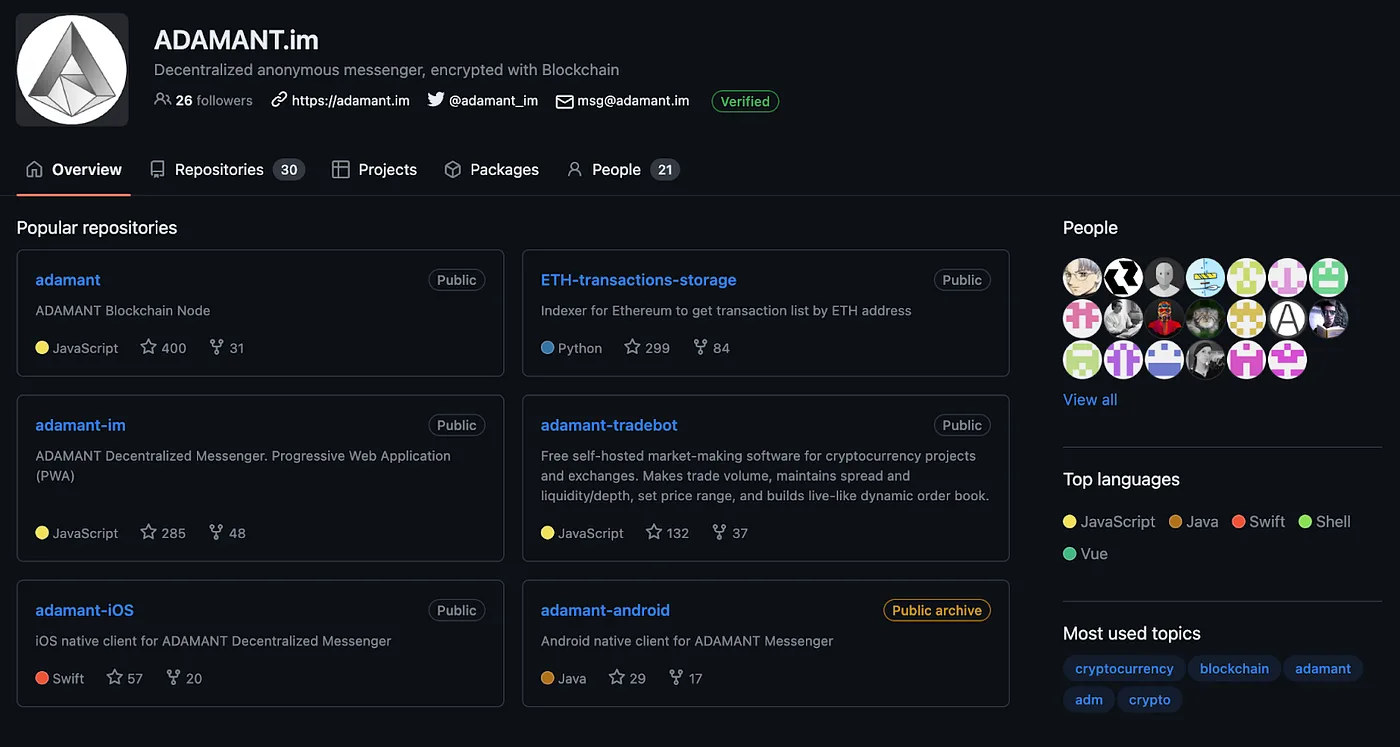
Roskomnadzor’s request named the organization “ADAMANT TECH LABS,” which no longer exists. Since December 2020, ADAMANT has operated as a Foundation with no leader or central management. The open-source project is maintained by a community of developers on GitHub.
Impact on users in Russia
Even with the official website blocked, the ADAMANT protocol continues to function normally. Because messages are stored across multiple independent nodes rather than on a central server, the network has no single endpoint to take offline. This event served as a real-world stress test of ADAMANT’s decentralization claims, and the system remained operational throughout.
Users in Russia should expect that the main website, the web app URL, and public nodes under adamant.im may be unreachable. As a quick workaround, users can connect via VPN or through the Tor network. Desktop apps for Windows, Linux, and macOS are available from the project’s GitHub releases and connect directly to the protocol without relying on the web frontend.
For a permanent solution, users can run their own ADAMANT node with API enabled in the configuration, run their own instance of the Messenger from the open-source repository, and point the Messenger’s config file to that self-hosted node. This eliminates dependence on any public infrastructure that could be blocked.
Conclusions
The block by Roskomnadzor highlights the ongoing tension between state authorities seeking to control digital communications and decentralized platforms designed to resist such control. For ADAMANT, the incident served as a practical demonstration that a blockchain-based messaging protocol can continue operating even when its primary web presence is taken offline. The ADAMANT team has reiterated its commitment to improving the platform and ensuring secure, private, uncensored communication worldwide.